

How can research data management (RDM) become an integral part of everyday engineering research rather than an additional task? This question was at the heart of NFDI4ING’s contribution to the 2026 autumn meeting of the Wissenschaftliche Gesellschaft für Montage, Handhabung und Industrierobotik (MHI) in Saarbrücken on 22–23 September.
On the first day, Mario Moser introduced the NFDI4ING archetype FIONA Summer School that took place in August. The Summer School illustrates two important aspects of NFDI4ING’s work: fostering a cultural shift towards systematic research data management in engineering and demonstrating how existing NFDI4ING services can be combined in concrete use cases to support researchers in handling their data.
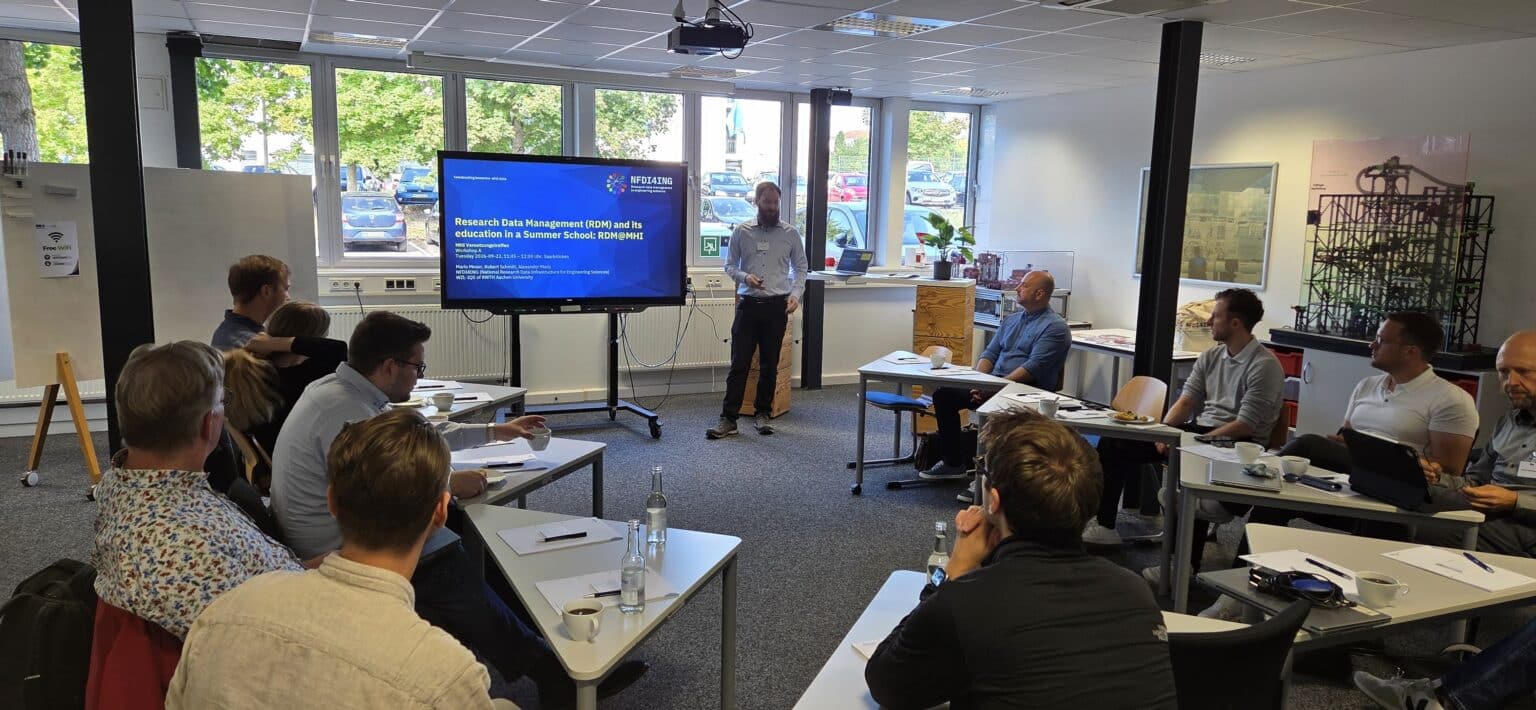
The presentation was followed by a lively discussion with around 15 senior researchers about their experiences with and requirements for RDM services. One point met with broad agreement: good documentation is essential for keeping research data understandable and reusable. At the same time, documentation is still often perceived as an additional task alongside the actual research work.
The discussion also highlighted how strongly data practices can differ across engineering contexts. While industrial research projects can impose considerable restrictions on data sharing, the need to keep data understandable remains. Other participants reported well-established processes in areas such as forming technology, where research data have been collected systematically for as long as 20 years.
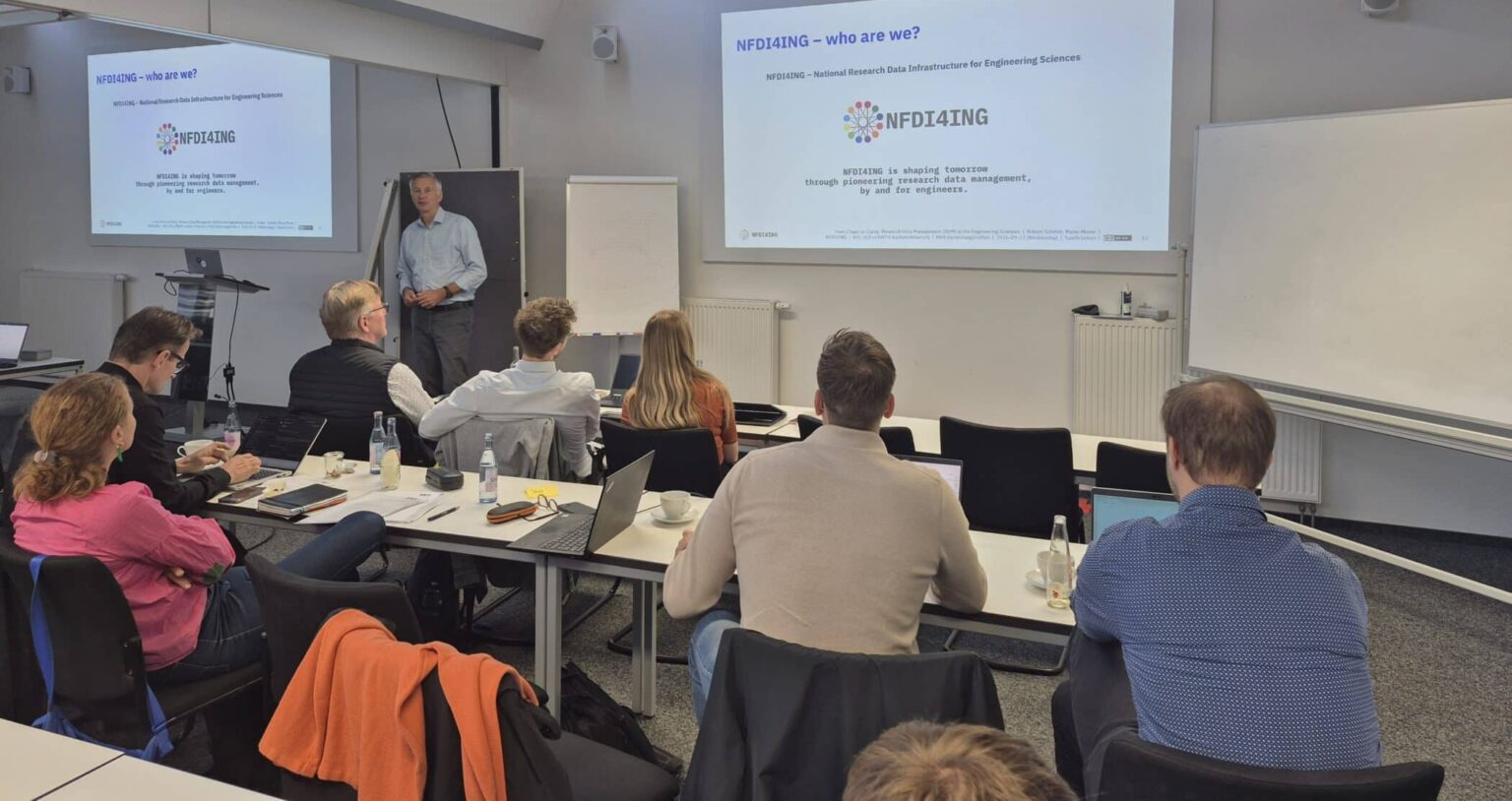
On the second day, NFDI4ING spokesperson Prof. Robert Schmitt opened the RDM session with the use case of a researcher who was able to address challenges involving large volumes of research data with the help of RDM services. He then provided an overview of NFDI4ING’s services and resources.
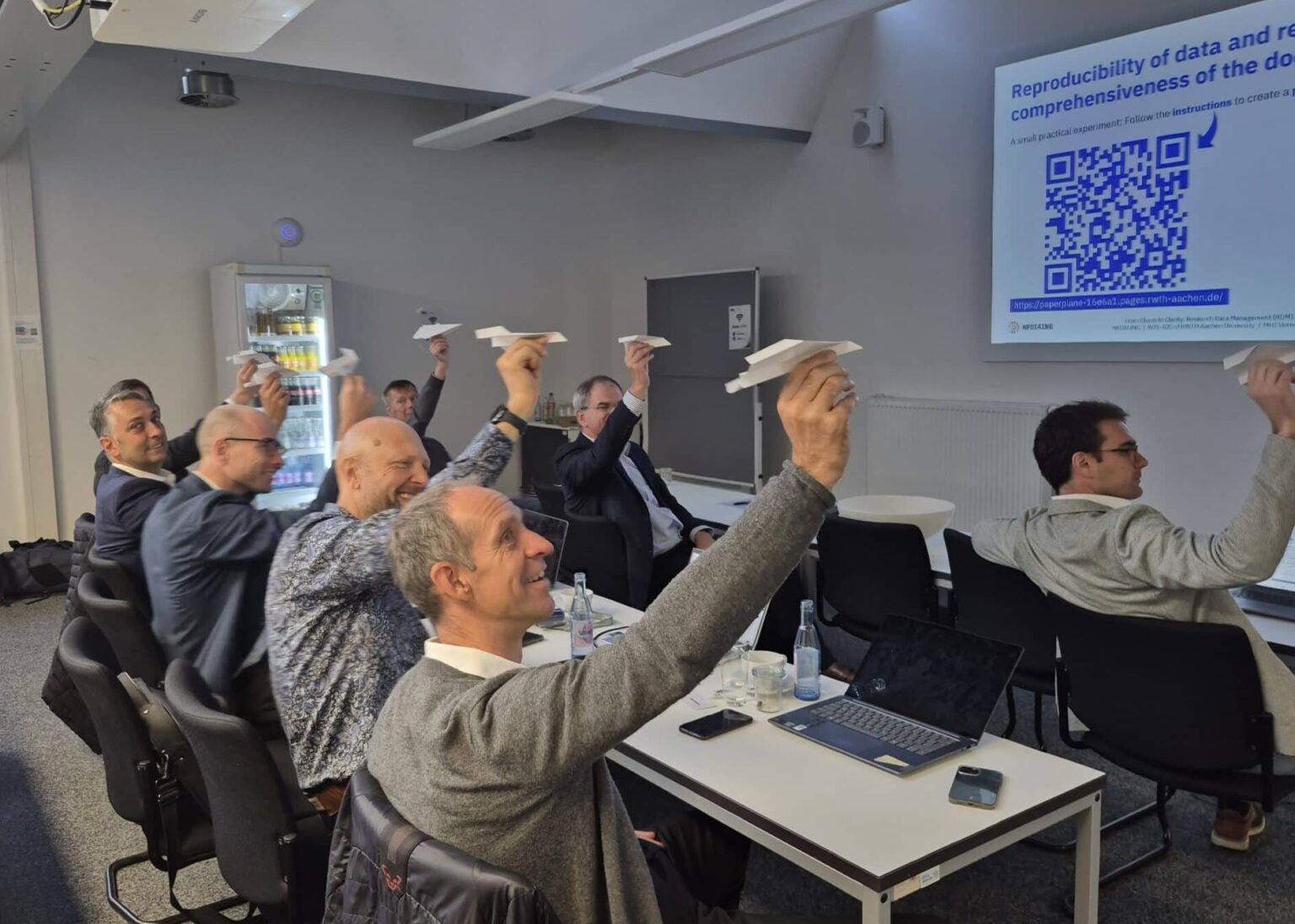
The approximately 30 professors and senior researchers were also invited to experience the challenges of reproducibility first-hand: following the same set of instructions, they each folded a paper airplane. The slightly different results offered a simple but effective illustration of a familiar research challenge: apparently clear instructions do not necessarily lead to identical outcomes. Thoughtful documentation and data management are therefore crucial for making research processes comprehensible and reproducible.
The session concluded by looking ahead to the very beginning of the research lifecycle. Prof. Robert Schmitt and Mario Moser presented a draft of discipline-specific RDM recommendations for mechanical engineering and production engineering, designed to support researchers already during the proposal stage of new projects. Until the next MHI meeting, participants are invited to review and comment on the draft, helping to ensure that the recommendations are both understandable and applicable in engineering practice.
The two-day exchange provided valuable insights into how RDM is already practiced across the engineering community, and where further support is needed. These perspectives will help NFDI4ING continue developing services and guidance that respond to the realities of engineering research.
Mario Moser