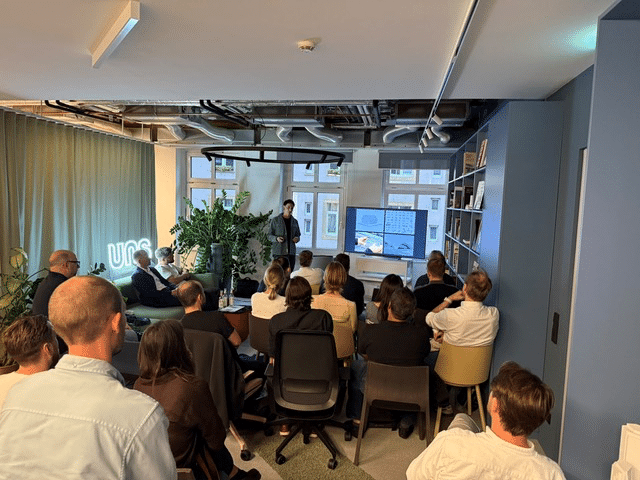
The Design Technology Meetup in Frankfurt am Main brought together participants from architecture, engineering, design technology, software, research and industry to exchange on current digital workflows and emerging technologies in the AEC sector.
Roger Winkler from the University and State Library Darmstadt contributed with an input on the Architectural RDM-Pipeline, a joint project with the Institute for Computational Design and Construction (ICD) at the University of Stuttgart in the context of NFDI4ING. Rather than focusing on the technical workflow itself, the presentation addressed how curated architectural research data collections can create value beyond the research projects in which they are developed.
Research on contemporary buildings often depends on project information published by architects, engineers, manufacturers, magazines, commercial databases, and online platforms. These sources are valuable, but they are usually not created for research purposes and rarely provide access to structured data. Bringing such fragmented records together enables researchers to build and explore collections around building typologies, construction systems, materials, environmental performance, or stakeholder networks.
In this context, FAIR data is not only about making datasets publicly available. For architectural collections to remain findable, accessible, interoperable, and reusable, their meaning, provenance, sources, and underlying decisions need to remain understandable beyond the original research context. This also requires data to be provided in forms that can be explored, combined, and reused beyond a single spreadsheet or project-specific website.
A central challenge is the limited lifetime of research projects and their digital outputs. Interactive databases and project websites are often closely tied to project funding, while long-term research data publication frequently results in downloadable files that are less suitable for exploration and reuse. The presentation therefore highlighted the potential of research data infrastructures to connect long-term availability with practical forms of access, such as benchmarking, browsing comparable projects, or exploring stakeholder networks, materials, and technologies.
Closer collaboration with architecture and engineering practice can also improve the quality of such research collections themselves. Practitioners and industry partners can help validate information about contemporary projects, contribute missing data, and identify requirements and use cases that make these collections more relevant and reusable in return. The meetup provided a valuable opportunity to bring these questions into direct exchange with the wider AEC practice and design technology community.
Author: Roger Winkler, ULB Darmstadt