

Empowering Engineering Scientists with Practical RDM Skills (by Agnes Kleinhans)
Organised by our Task Area Alex, this year’s Summer School took place at the Institute for Fluid Systems (Institut für Fluidsystemtechnik) at TU Darmstadt. Preceded by two On-Ramp courses on Python (30 June) and Git (2 July), the three-day main programme (6–8 July) guided participants through the complete data lifecycle of a small experiment carried out using Raspberry Pis.
The agenda followed the experimental workflow:
- Day 1 focused on planning and documenting the experimental setup — from an introduction to the Research Data Management Organiser (RDMO) through to documenting the test rig and its FAIR integration.
- Day 2 was dedicated to data collection and analysis as well as documenting the workflow, supported by NFDI4ING tools and services.
- Day 3 centred entirely on publishing: participants learned how papers and data can be published together and how modern publication pathways pave the way towards open, reproducible science.
A total of 12 researchers took part in the Summer School. Throughout the event, participants gained valuable insights into good research data management (RDM) practices and learned how to integrate NFDI4ING tools effectively into their day-to-day research. Although the example was based on a physical experiment, the methods conveyed are equally applicable to simulations and other scientific workflows.
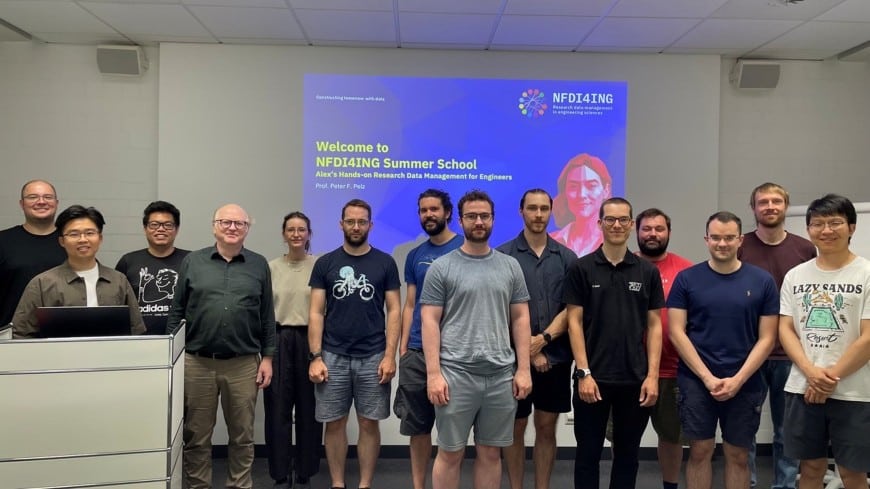
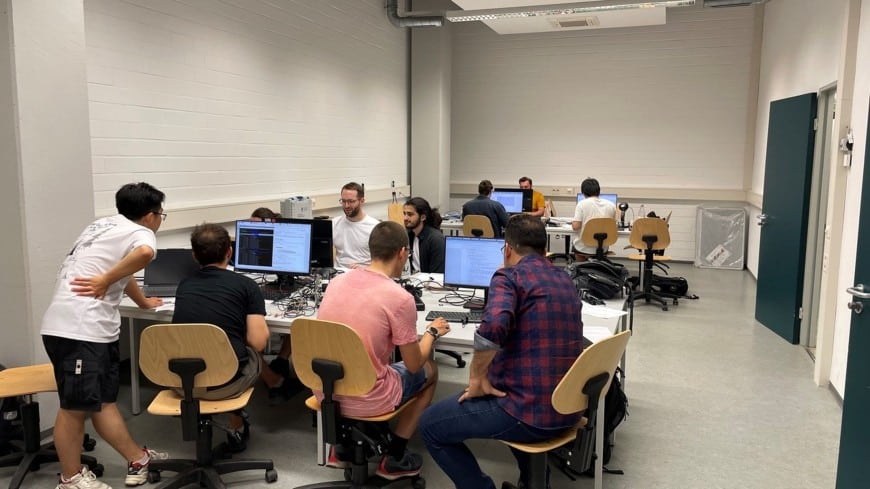
Participants left the Summer School with new tools, concrete approaches and a sharpened perspective on how they handle their own research data. Several participants expressed the intention to adopt individual methods directly in their everyday work. One participant highlighted how valuable the Summer School was, particularly at the start of a PhD, for structuring research data properly from the very beginning. Particular interest was directed at the Research Data Management Organiser (RDMO) as a concrete, ready-to-use tool for the structured planning of research data management.
The Summer School aligns with NFDI4ING’s overarching mission: to make engineering research more transparent, sustainable and reproducible through the integration of FAIR data management.
The Summer School also provided space for open exchange and constructive feedback, which will feed into the development of future editions. One suggestion that emerged was to offer a dedicated format in future — such as a hackathon or a compact course — aimed specifically at research group leaders, in order to embed research data management at the leadership level as well. Overall, the event underscores the growing importance of research data management as a core scientific competency.
Researchers interested in integrating similar practices into their courses or research groups are warmly invited to connect with NFDI4ING and future editions of the Summer School.