
Archetype ALEX
...for Bespoke Experiments with variable setups

“Hello, I’m Alex! I conduct bespoke, one-of-a-kind experiments in custom-tailored hardware or software. With these setups, I study phenomena that range from nano and microscale all the way to macroscale. They may be, for example, investigation of wall slip, cloud cavitation, or algorithmic planning of fluid systems.
The setups I work with are not only bespoke, but also reconfigurable: they can change over time and are often operated by multiple (generations) of scientists.
On one hand, my interest is the FAIR analysis of physical phenomena; on the other, it is the FAIR synthesis in systems design and operation.
My research fields include process engineering, mechanical engineering, control engineering, thermo- and fluid dynamics, energy systems and systems engineering.”
NFDI4ING Task Area Alex
The task area provides Best Practices, Tools, Consulting and support to researchers like ALEX.
It is part of NFDI4ING’s thematic cluster Verification & Validation, which integrates ALEX’ experimental work with research software development and high-performance computing.
Best practise: Data literacy right from the start
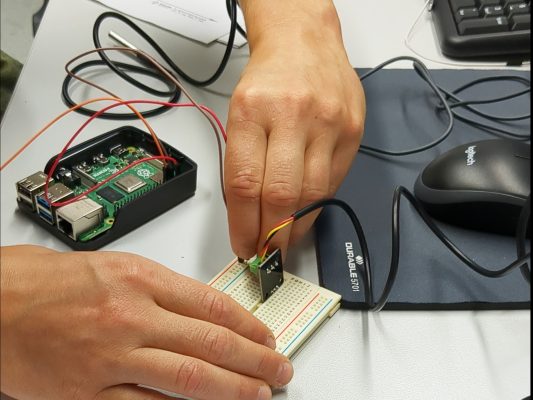
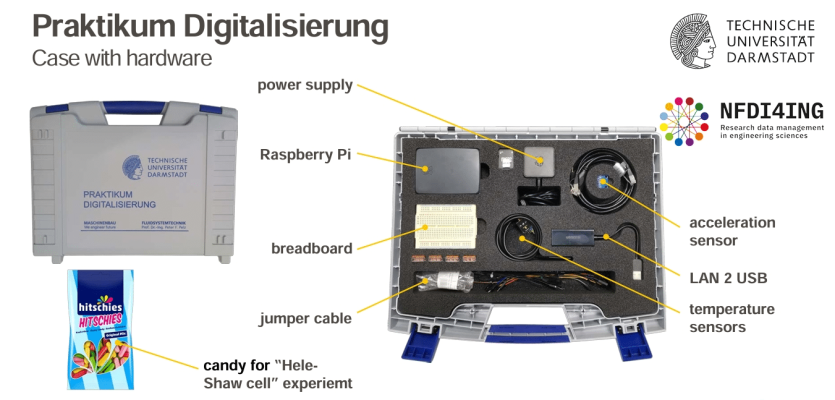
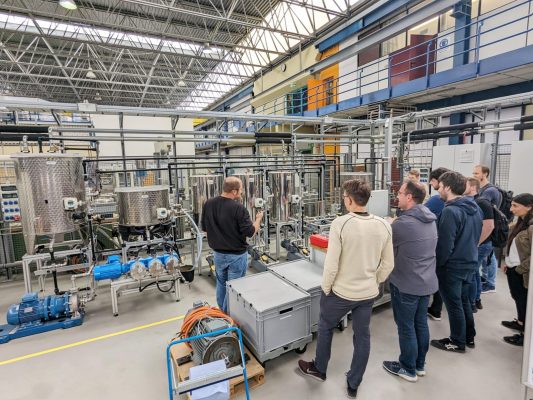
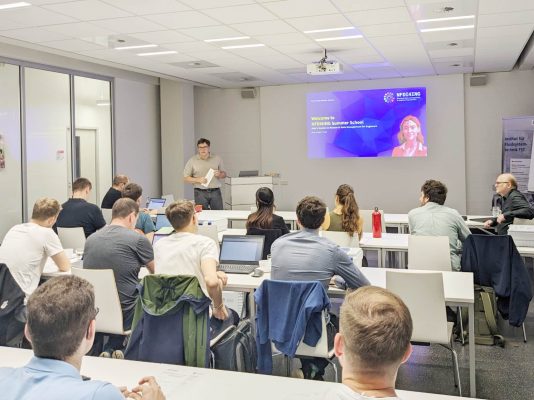
Modern experimental research relies on understandable and reproducible digital workflows that require a high level of data literacy among researchers. ALEX is pioneering the inclusion of data literacy in engineering curricula and offers comprehensive hands-on trainings, like its Summer School. One example is an experiment kit for data literacy and research data management training built around ALEX’ digital workflows.
NFDI4ING tools and services
Typical workflows for researchers represented by the archetype ALEX integrate general-purpose services for engineers from NFDI4ING with specialized tools and best practices based on Python, Git, JSON, and HDF5.
ALEX plans research procedures and data formats with RMDO. Experimental setups and their modifications are documented with MDSDT&OSII, which provides PIDs, QR codes, and machine-readable sensor data sheets. Sensor data and metadata are stored in HDF5 format, while Coscine is used for data storage and exchange.
To make data and plots findable, ALEX uses Plot Serializer and PlotID, employing PIDs and RO-Crates where appropriate. In simulation workflows, PyDuCo can be used to provide Dublin Core metadata, or domain-specific research software with integrated RDM capabilities can be developed, such as SOFIRpy. Data may then be published in RADAR.NFDI4ING or combined with paper publications through ing.grid.
At every stage of the workflow, metadata and data from previous steps are linked and enriched with additional information, resulting in findable, accessible, interoperable, and reusable (FAIR) digital objects (FDOs).
Beyond research workflows, ALEX also represents efforts to advance data literacy in engineering education. The archetype highlights the integration of data literacy into engineering curricula and comprehensive hands-on training opportunities such as the Summer School. One example is an experiment kit for data literacy and research data management training built around ALEX’s digital workflows.
Open-Source Tool Portfolio
Task Area ALEX provides and further develops software solutions for experimental workflows. They implement NFDI4ING standards and are meant to be combined and adopted to individual needs.