NFDI4ING's Metadata Profile Service assists the community in creating and sharing subject-specific metadata profiles that support FAIR and interoperable research data.
A fundamental aspect of making research data FAIR is the use of high-quality metadata. At the same time, creating structured and machine-readable metadata is often still too complex for everyday research practice.
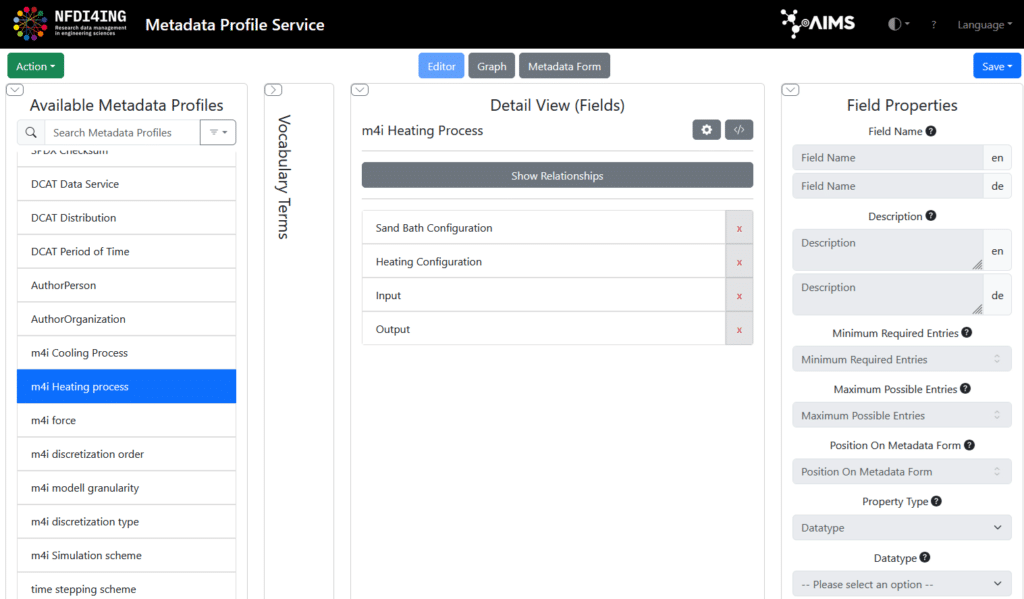
The NFDI4ING Metadata Profile Service (MPS) addresses this challenge by helping researchers and data stewards create, share and reuse metadata profiles for their research. The service provides a graphical user interface that makes it easier to develop RDF-compliant metadata profiles without requiring in-depth knowledge of RDF, SHACL or ontology modelling.
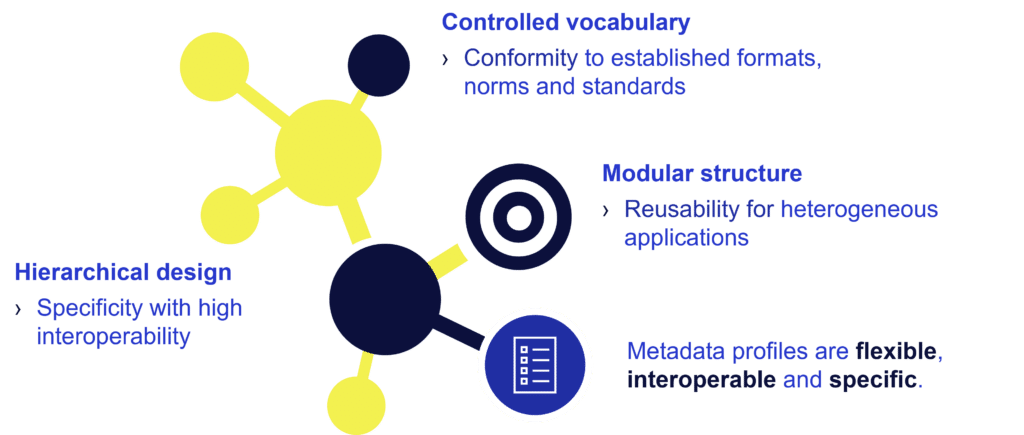
MPS profiles follow a hierarchical design based on inheritance and modularity and build on existing controlled vocabularies to ensure interoperability.
This is especially valuable for the NFDI4ING community. Researchers in engineering often work with highly specific experimental setups and need profiles tailored to their specific needs. At the same time, these profiles should remain interoperable and build on existing terminologies. More than 150 profiles are already publicly available through the service and can be reused or combined in new profiles.
Screenshot of the Metadata Profile Service showing a Heating Process profile
The broader goal behind the service is to make semantic, machine-readable metadata easier to integrate into existing research workflows. The profiles can be utilised to automatically generate metadata forms or search interfaces, for example for services such as the NFDI4ING Knowledge Graph Explorer and Coscine.
The service is being further improved through enhancements to usability and integration into tools such as electronic laboratory notebooks. This will make it even easier to create and apply metadata profiles directly within established research environments.
The software behind this service is open source and developed in the DFG-funded project AIMS 2 (Grant No. 432233186)