What is the Field Database Plaform?
The Field Database Platform is a structured management and discovery platform for sensor-based field experiment data. Instead of functioning as a traditional file repository, the Field Database Platform acts as an exploration and organization layer between data collection and long-term archival.
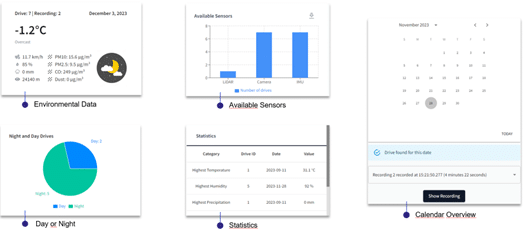
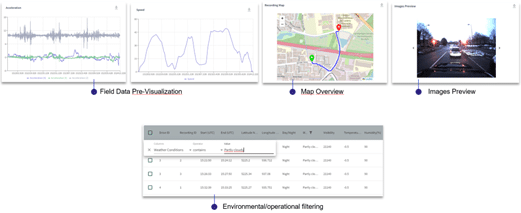
Researchers who conduct field experiments can publish structured descriptions of their datasets on the platform, allowing others to preview, filter, and evaluate experiments before accessing large volumes of raw data. The Field Database Platform enables contextual representation of experiments such as environmental conditions. This allows datasets to be understood and compared without direct inspection of raw files.
The platform is currently being extended following Data Mesh principles, promoting domain ownership, data-as-product thinking, and federated governance across research domains.
Added Value
Field experiments are time-, resource-, and personnel-intensive, making the generated data highly valuable. The Field Database Platform increases the visibility, comparability, and reusability of these datasets by enabling structured exploration, filtering, and early evaluation before raw data download. Before distributing monolithic data archives, experiment data are made discoverable and reusable as structured research assets.
Who is it for?
The Field Database Platform is designed for:
- Researchers conducting sensor-based field experiments
- Engineering and CPS-related research projects
- Automotive, robotics, mobility, and environmental research
It is particularly suited for researchers who aim to make their field data FAIR and easier for others to discover and reuse. By publishing structured experiment descriptions on the platform, datasets become identifiable and previewable before raw data is requested or downloaded.
Current Use Cases
Currently, the platform integrates two use cases:
- a multi-sensor research vehicle equipped with cameras, IMU, and GPS (Leibniz University Hannover, Institute of Product Development and Device Construction – IPeG);
- the RoBiVaL field robot use case (German Research Center for Artificial Intelligence – DFKI Bremen).
Limitations
While the FDP improves how researchers interact with data, it may require some effort to integrate certain sensor types or data formats that aren’t supported yet (e.g., LiDAR point clouds).
Future Developments
The Field Database Platform is evolving toward a Data Mesh-based architecture, emphasizing domain ownership, data-as-product thinking, and federated governance. At the same time, additional institutional use cases will be integrated to broaden the spectrum of structured field data and strengthen cross-domain reuse.