Upcoming Summer Schools: ALEX’ Summer School starting June 30, 2026 More information and registration available here.
The NFDI4ING Summer Schools offer participants a hands-on introduction to research data management (RDM) in the engineering sciences.
NFDI4ING’s Summer School program is meant to offer a practical and comprehensive introduction into efficient research workflows that yield well-documented and re-usable data. It introduces NFDI4ING core services such as RDMO, Coscine, RADAR4ING or ING.GRID and their application in engineering sciences. The program is customized to different research workflows according to our Archetypes.
Aims and target audience The summer school aligns with the larger NFDI4ING mission to make research more transparent, sustainable, and reproducible by integrating FAIR data management practices into the everyday routines of engineering researchers.
The program is targeted at PhD candidates and the staff of institutes or SFB/TRR projects that need to produce, share and publish comprehensible and replicable data and therefore need to ramp-up their theoretical and practical skills in modern research data management.
Impressions from ALEX' Summer school 2025
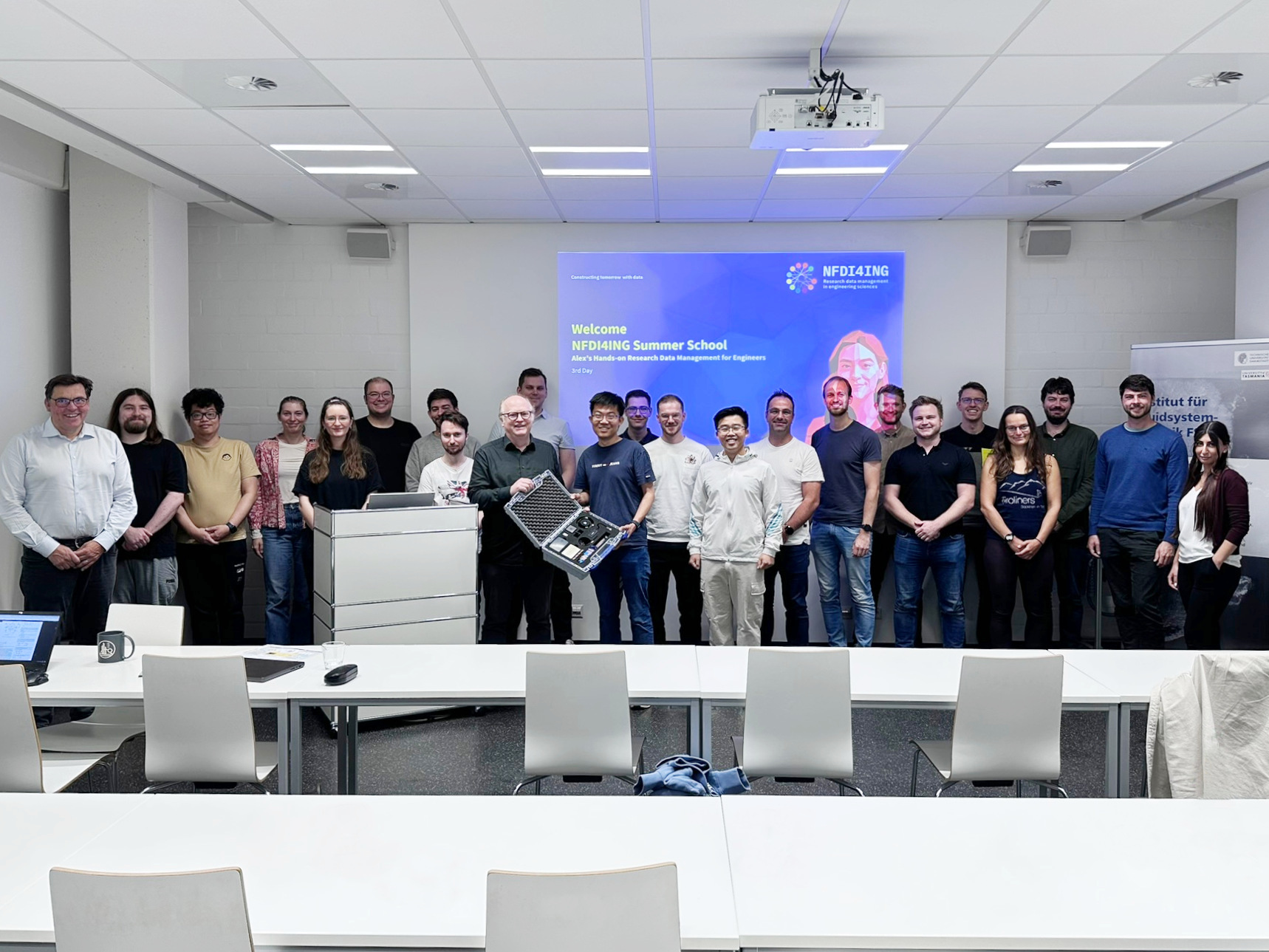
Participants and organisators of the NFDI4ING Summer School
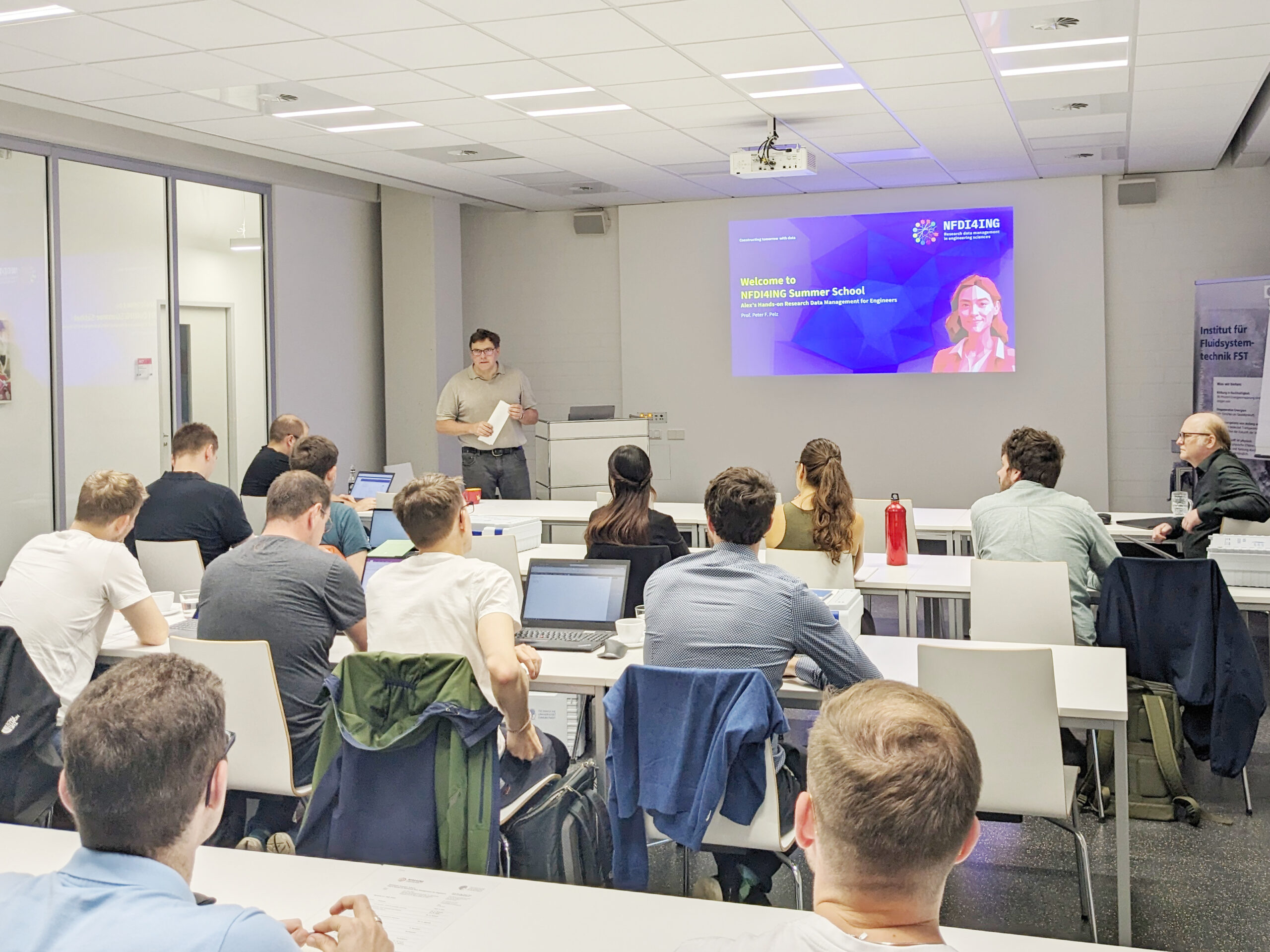
Prof. Pelz opens the summer school
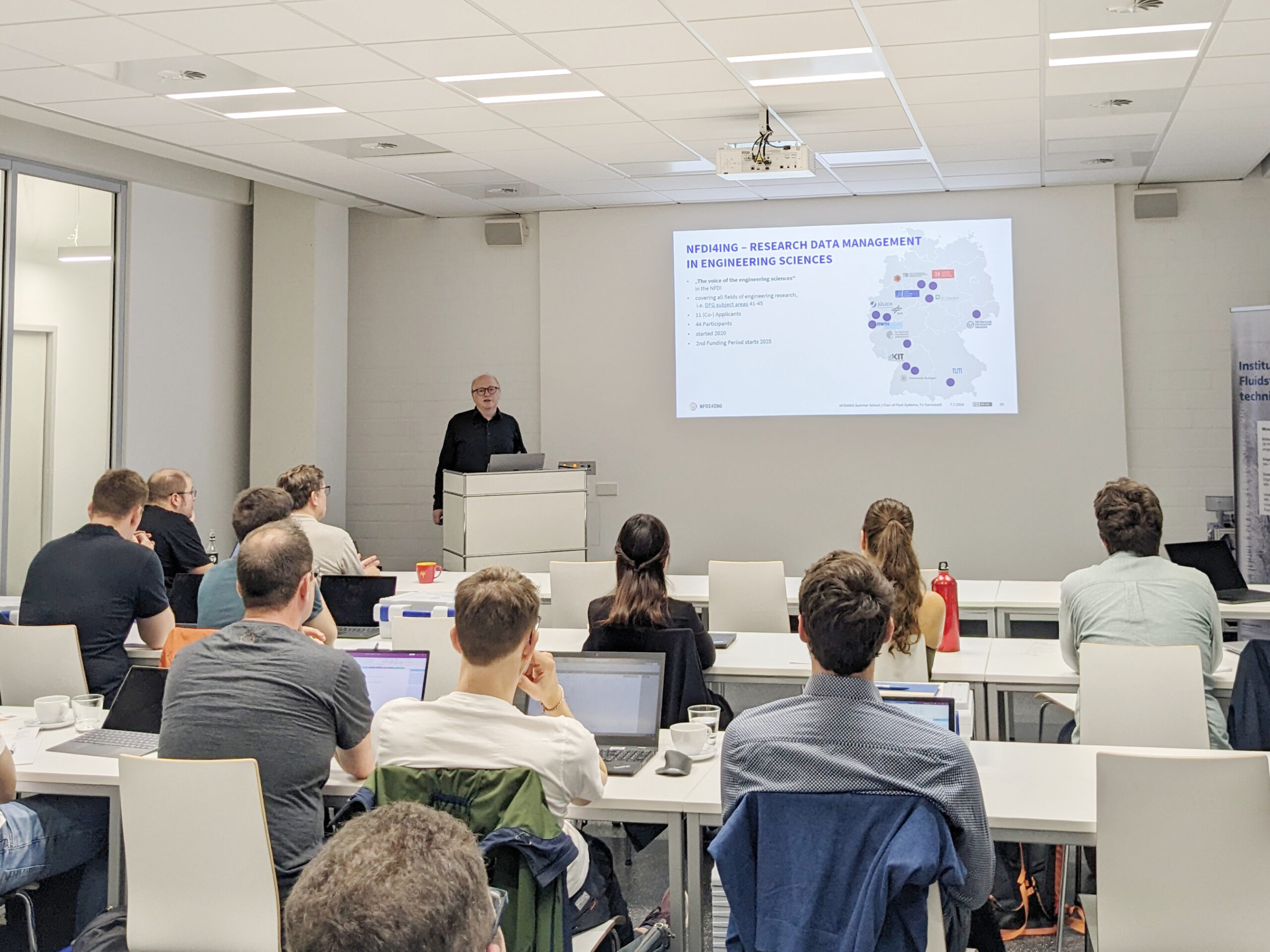
Andreas Noback introduces the NFDI4ING consortium to the participants.
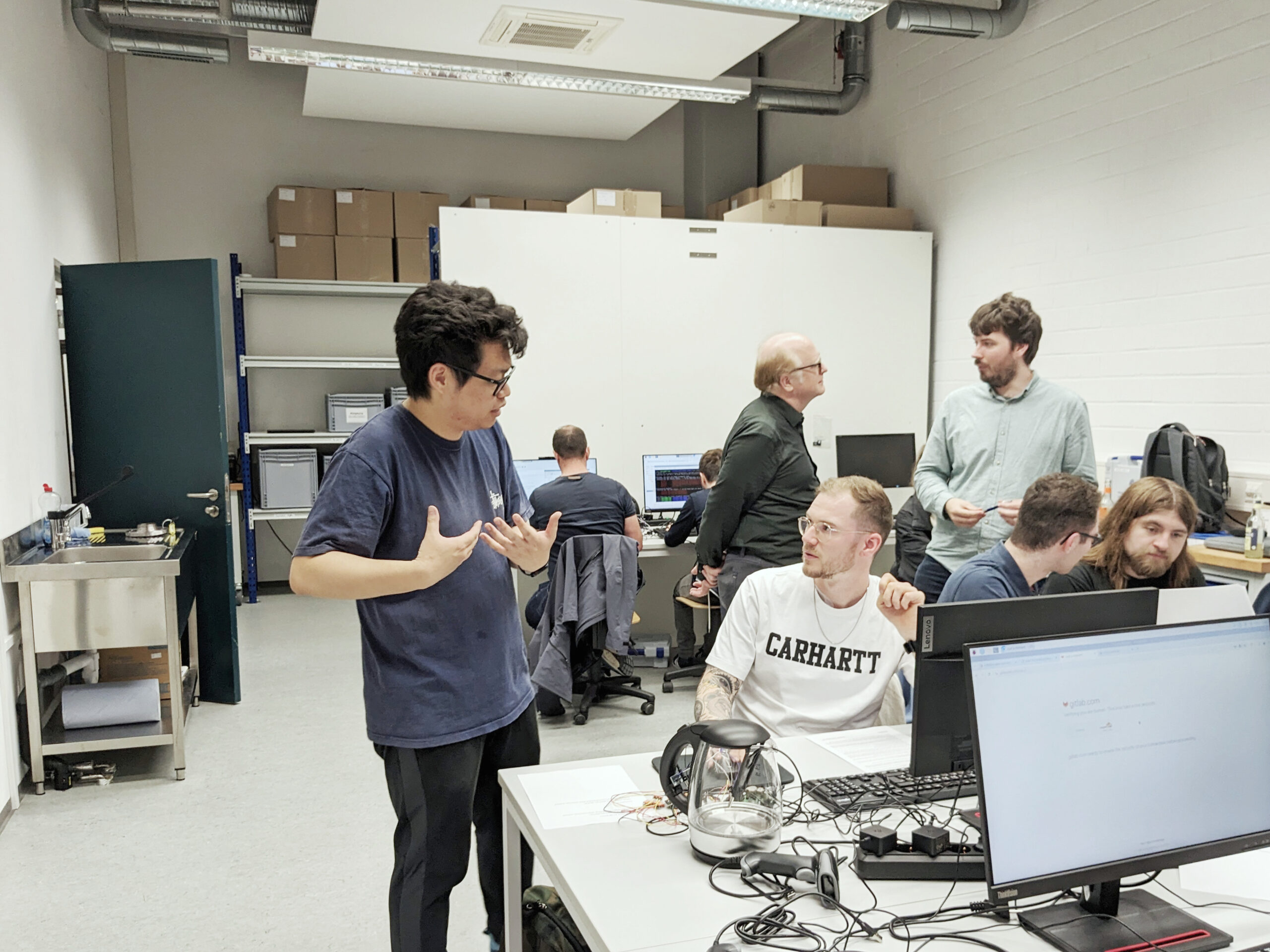
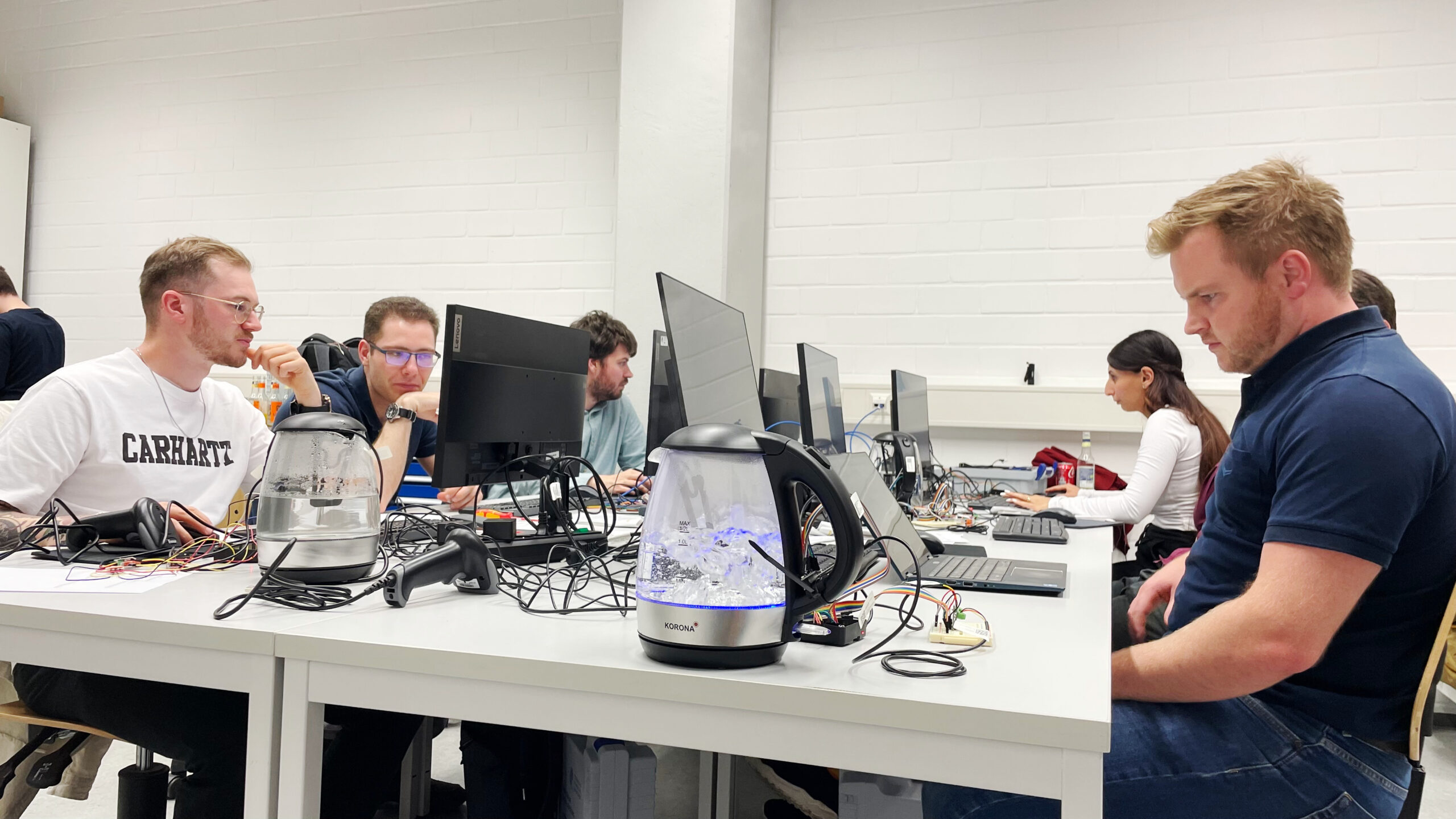
The lab work was a place for lively discussion. In the foreground, Ning Xia, a Ph.D. student at FST, dicsusses the task with a participant.
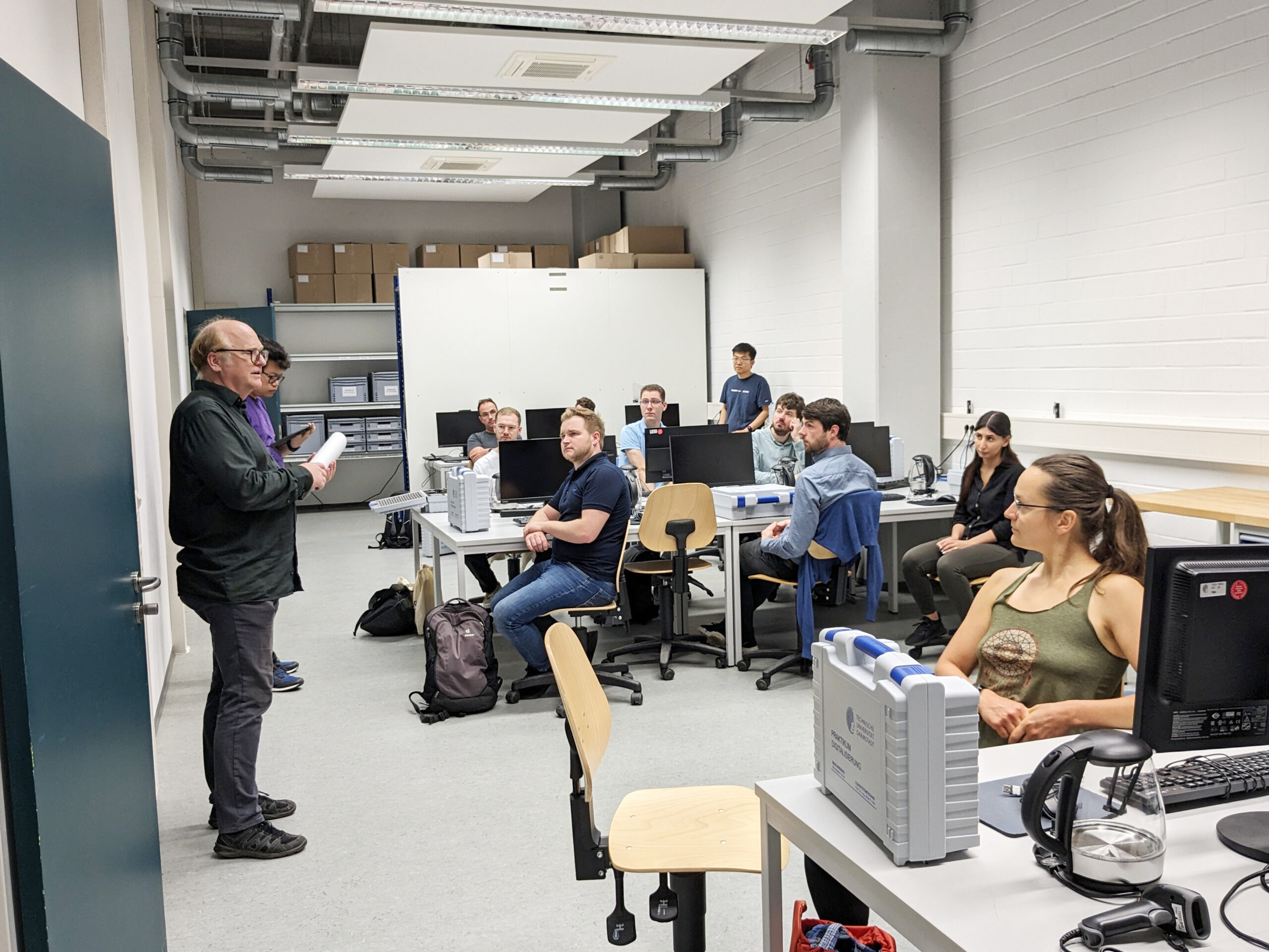
Andreas Noback (Group Lead RDM) explains the lab tasks to the participants
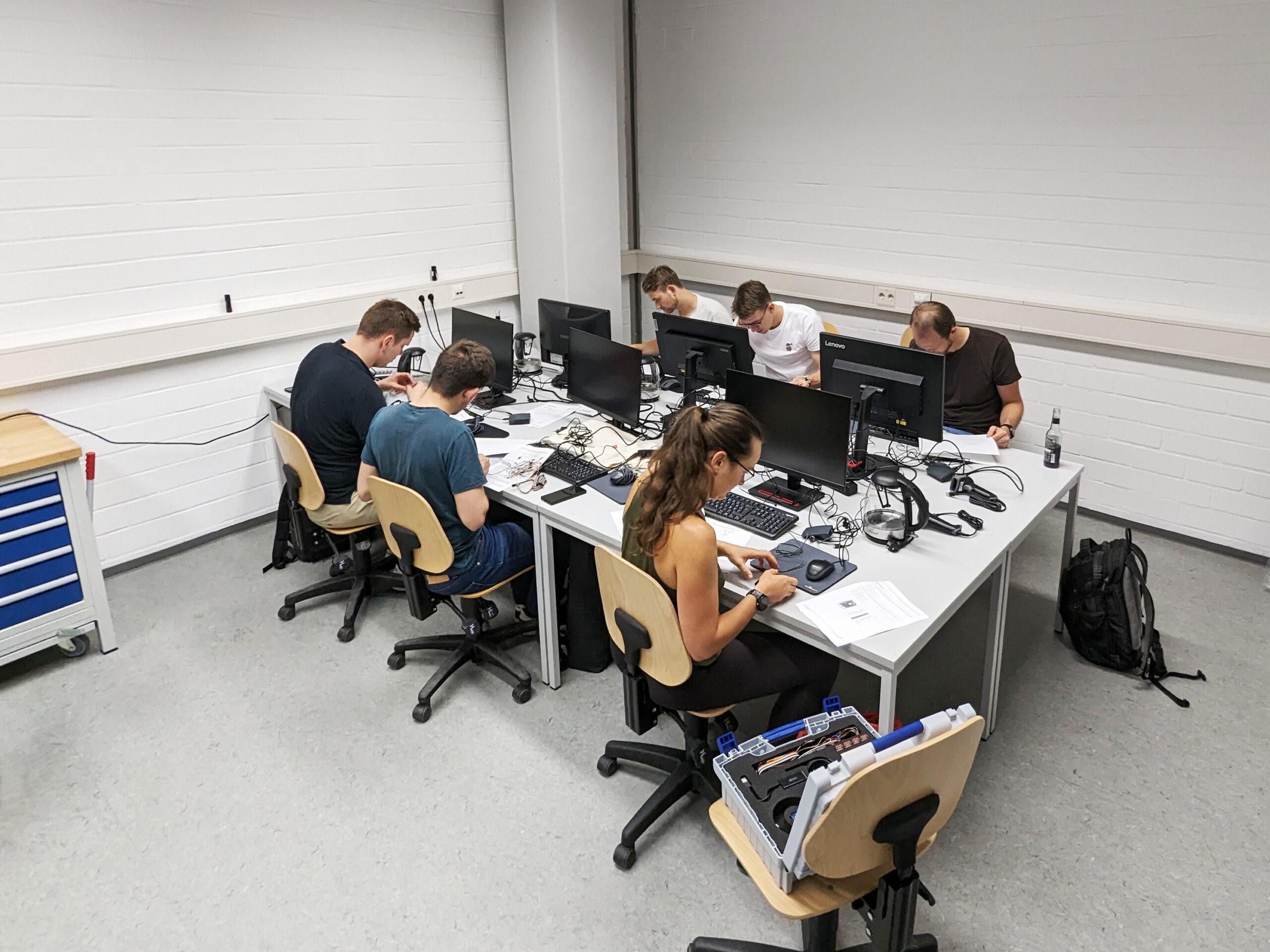
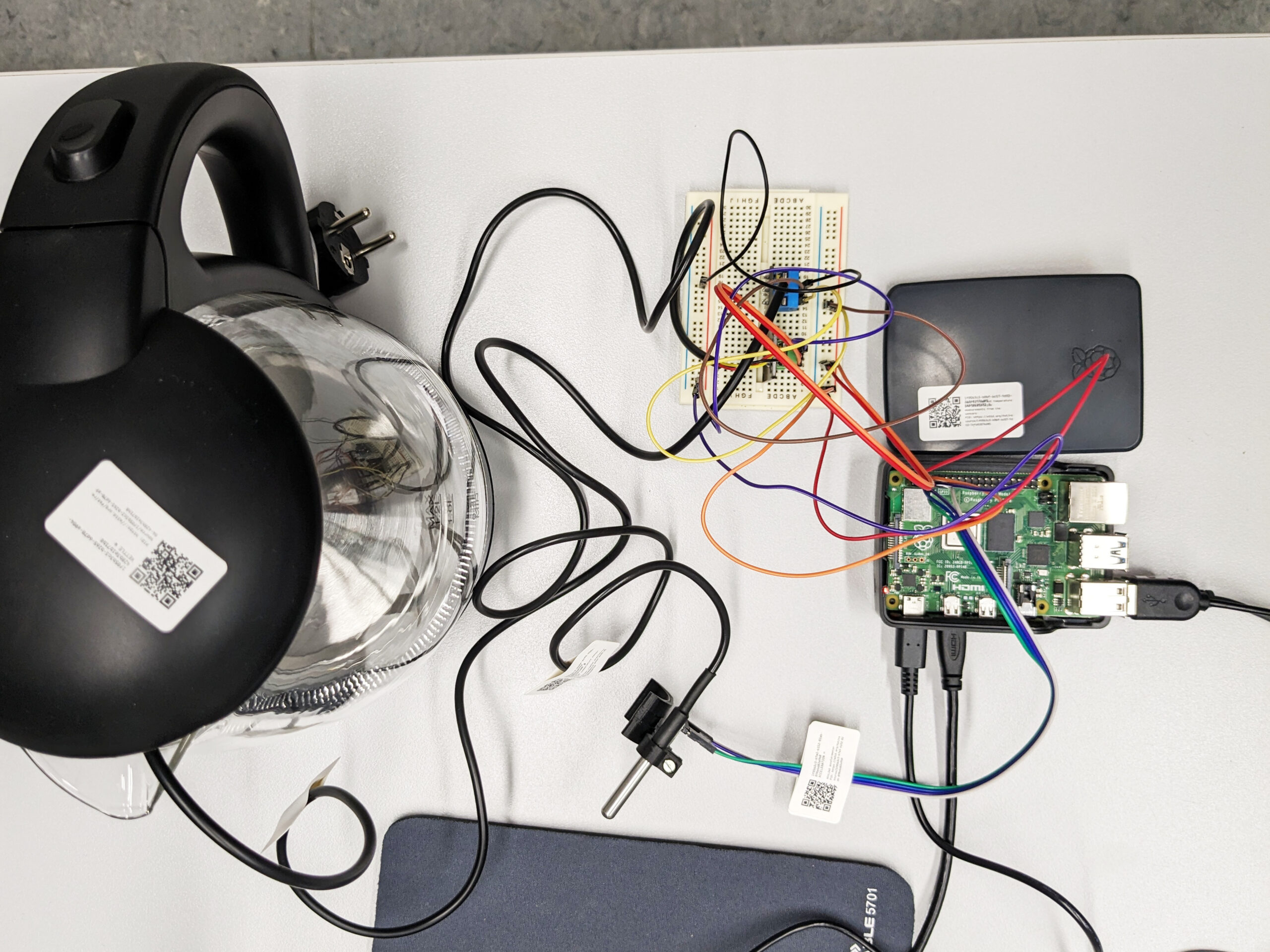
The participants are working on their lab tasks, setting up their Raspberry-PIs.
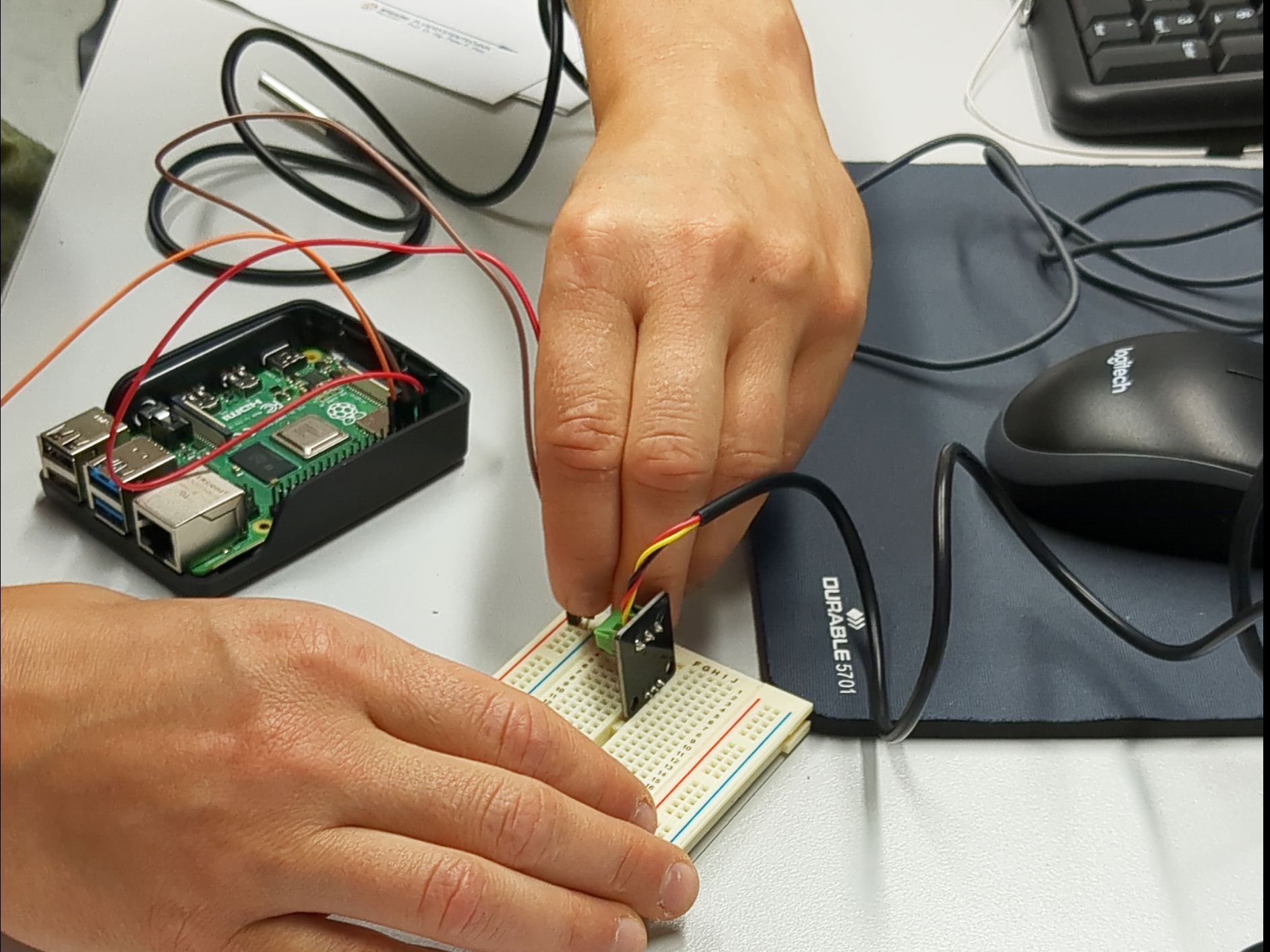
The summer school consisted of theoretical and hands-on parts. Here, a participant is setting up the experiment.
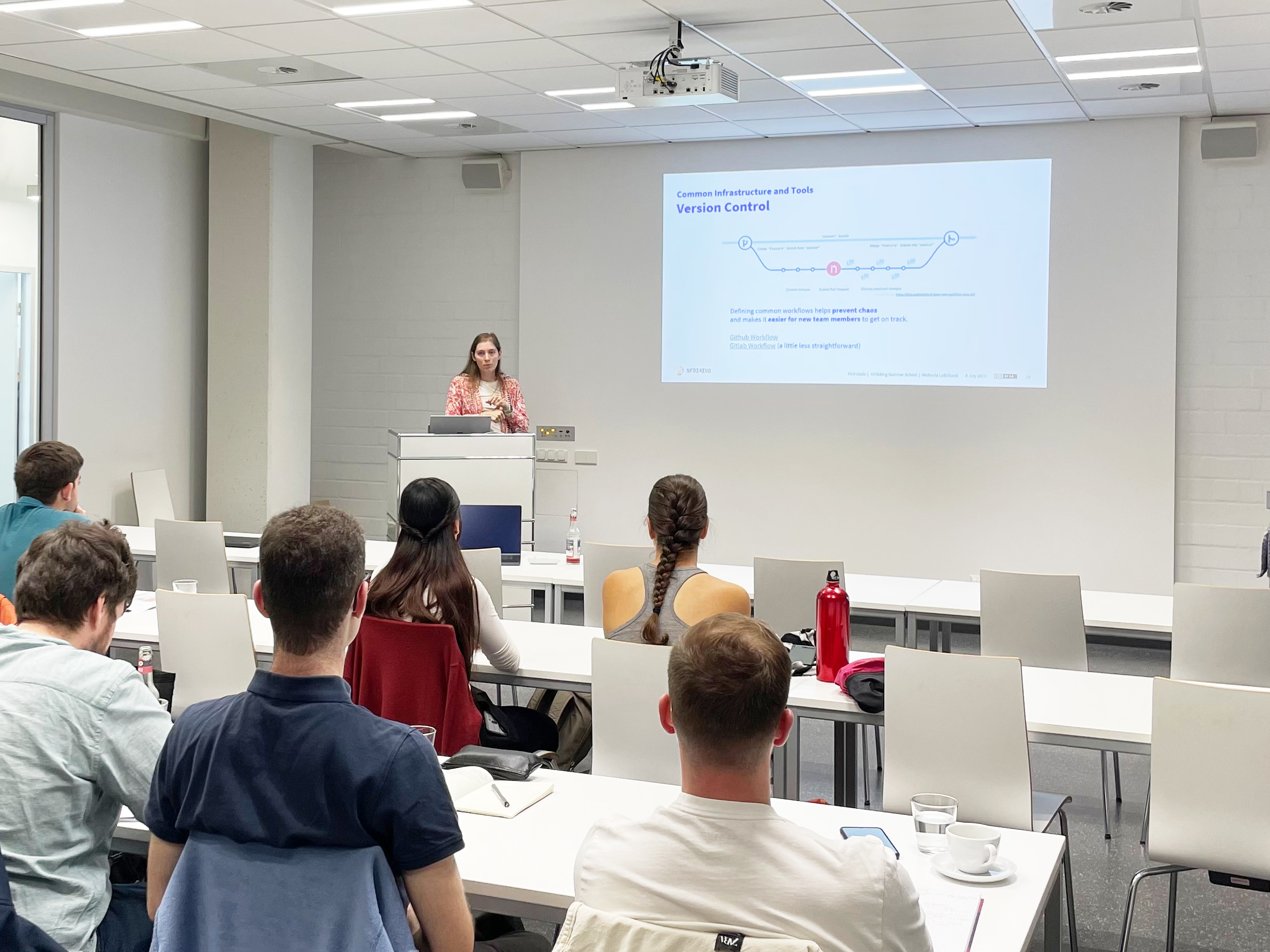
Coding is an integral part of conducting the experiment: Michaela Leštáková held a talk about FAIR software.
The finished experimental setup.
The experiment was carried out on the afternoon of the second day.
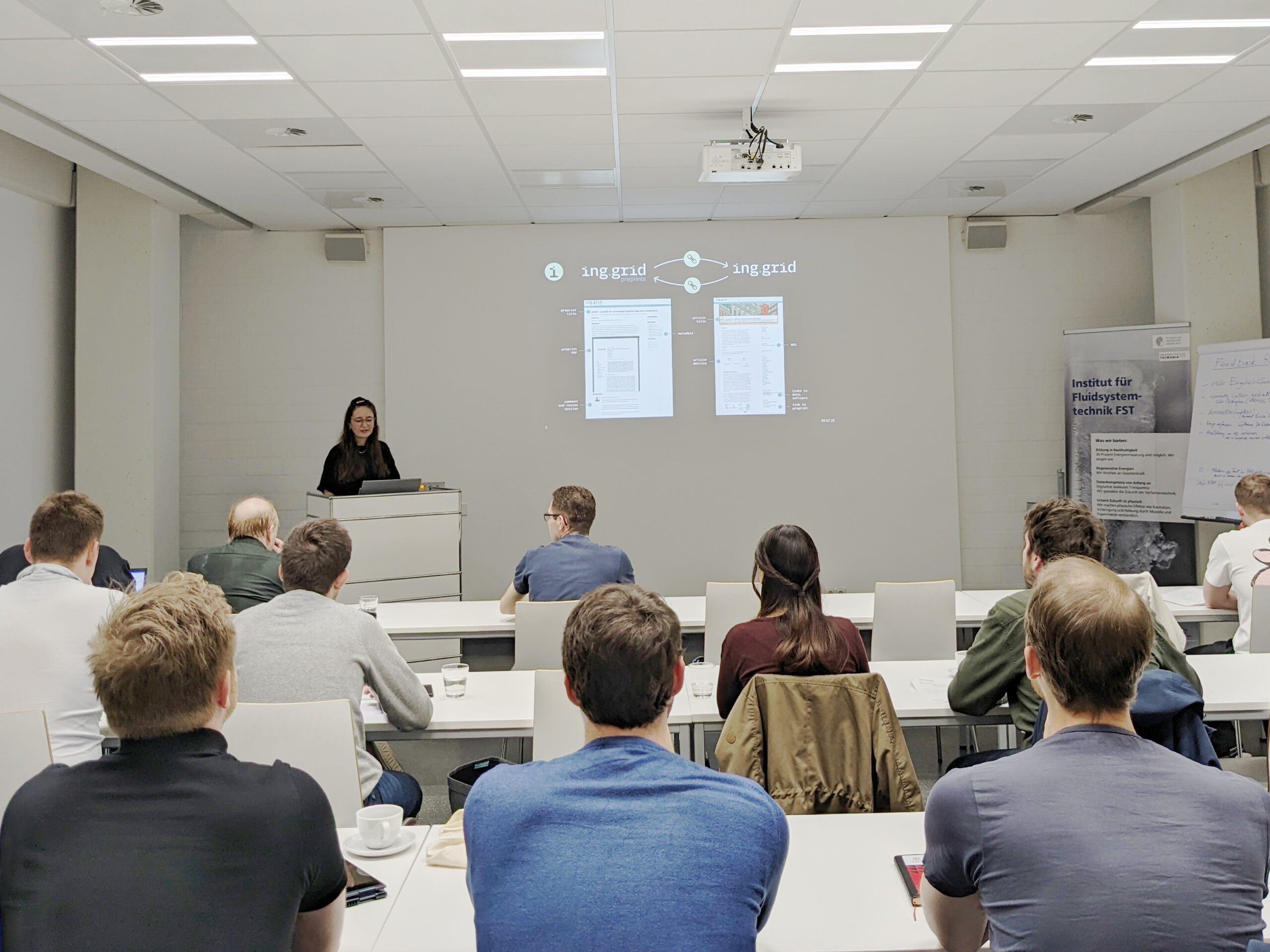
On the last day, Agnes Kleinhans introduced the journal ing.grid.
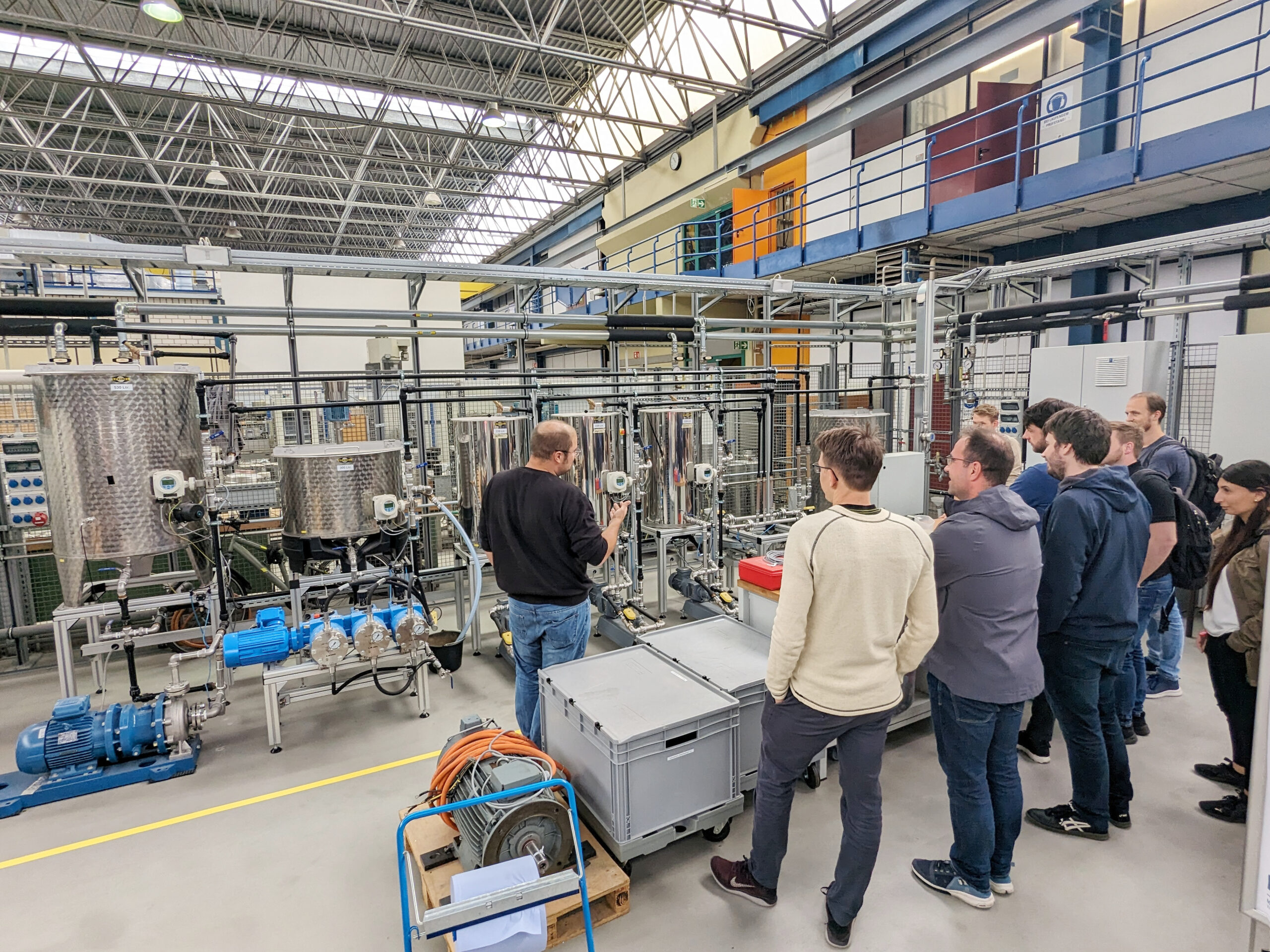
The summer school ended with a lab tour lead by Maximilian Kuhr (Group Lead Experiments).
The first NFDI4ING Summer School was organized for Archetype ALEX (“Bespoke, one-of-a-kind experiments”) at the Chair of Fluid Systems (TU Darmstadt) in 2025. The three-day program guided participants through the full data lifecycle of a small experiment conducted using Raspberry-PIs. The agenda followed a practical experimental workflow:
Day 1 focused on designing and documenting the experimental setup,
Day 2 covered data collection, analysis, and workflow documentation,
Day 3 concluded with the publication of data and visualizations as FAIR digital objects.
Throughout the event, participants gained valuable insights into RDM practices and learned how NFDI4ING tools can be effectively integrated into daily research routines. While the focus was on a physical experiment, the methods discussed are broadly applicable to simulation and other scientific workflows. In total 14 researchers from different German (TU Dortmund, Hochschule Rhein-Main, Universität Duisburg-Essen, Ruhr-Universität Bochum, Uni Rostock, FAU Erlangen-Nürnberg, TU Chemnitz, Leibniz Universität Hannover) and Austrian (Universität Innsbruck) universities participated in the Summer School.
The positive reception by participants reflects a growing recognition of RDM as an important academic competency. We are happy to share materials and experiences with faculty members interested in embedding similar practices into their curricula or research groups.
NFDI4ING invites engineers and researchers to the NFDI4ING Summer School 2026, a practice-oriented training on modern research data management in engineering sciences. The summer school combines online preparatory courses with an intensive on-site workshop in Darmstadt.
This NFDI4ING RDM Basics for Engineers series provides a practical introduction to research data management in the engineering sciences, combining basic concepts with hands-on exercises.
The NFDI4ING RDM Basics for Engineers lecture series can be booked as a dedicated course and provides a practical introduction to research data management in the engineering sciences, combining basic concepts with hands-on exercises.